Restaurant, website and Google Ads
Guide · Ads
The only meaningful measure of success for a restaurant's Google Ads is a ringing phone and a full table; clicks, impressions and site traffic only matter once they turn into reservations. That sounds obvious, yet most of the mistakes that lose restaurants money in advertising come from forgetting exactly this. Clicks go up in the report, the charts point upward, everyone seems happy — and the dinner service is still quiet.
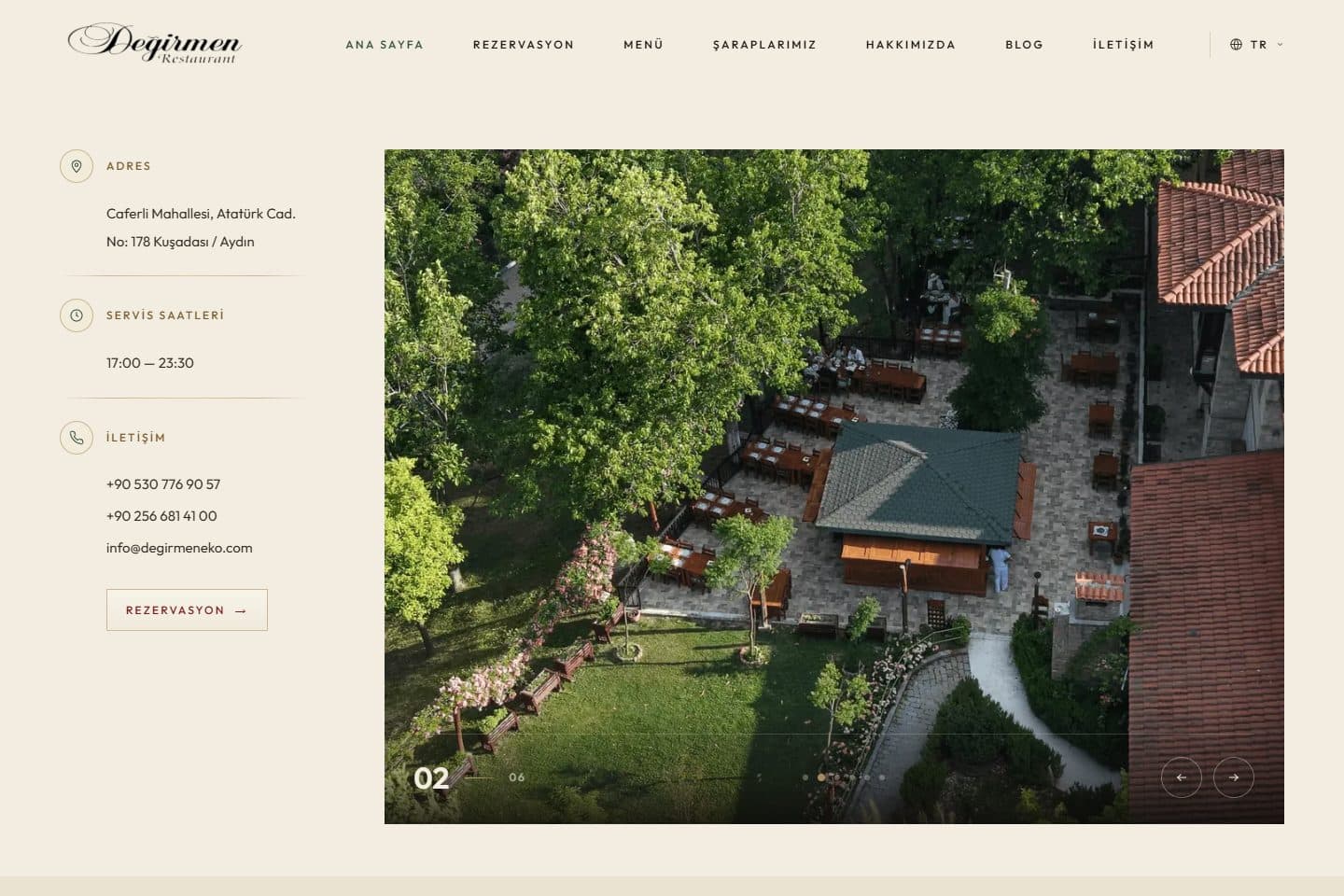
I built and manage both the website and the Google Ads account for Değirmen Restaurant in Kuşadası, on Türkiye's Aegean coast. The goal there was clear from day one: get the phone ringing. In this article I share the setup distilled from that experience: how to set up call conversion tracking, how to schedule ads around mealtimes and target the right area, and why your business profile and menu have to tell the same story while the ad is running — in that order.
You won't find promised numbers here; there is no sentence saying "this many reservations guaranteed". My aim is to give you a framework for deciding, when you advertise your restaurant on Google, with full knowledge of where your budget goes. You can read it and apply it yourself; that is how I wrote it.
Someone typing "restaurant in kusadasi" into their phone at 6:30 p.m. is not doing research; they are eating out tonight. The distance between a click and a full table is often a single phone call or a single tap on directions. If you judge your ads by clicks, you start optimizing the wrong thing without realizing it: you gather a crowd that clicks a lot but never calls.
There is a technical reason too. Google's systems optimize a campaign toward whatever you define as a "conversion". If your conversion is a site visit, the system finds you cheap clicks; if your conversion is a phone call, it finds people likely to call. So choosing the metric is not a reporting preference; it is the decision that determines where the budget actually goes.
The practical upshot: before launching a campaign, choose one action. For most restaurants this is either a phone call (a reservation) or a directions request (a walk-in guest). Keywords, scheduling, area, ad copy — everything else serves that one action.
Call conversion tracking is the setup that shows which campaign and which search term actually made the phone ring. Without it, optimization becomes guesswork: "I think this campaign is doing well" is the most expensive sentence you can hear in an ad account. It is set up once, and from then on every bit of spend has a visible return.
A note: this tracking does not record the content of your conversation. What it measures is which ad the call came from and how long it lasted. A minimum duration threshold is important; it stops misdials and calls hung up within seconds from counting as reservations and keeps your report honest.
The backbone of the setup consists of these steps:
Restaurant demand runs on the clock. A search for "a table for dinner" happens either a few hours before service or right during it. Ad scheduling should reflect that reality: if the kitchen closes at 10 p.m., there is no point spending budget at 1 a.m. — unless you take bookings for the next day, in which case you deliberately keep late-night searches on. The decision is yours; what matters is that it is a conscious one.
With Google Ads' ad schedule feature you can concentrate impressions before lunch and dinner service, scale them back in dead hours, or stop them entirely. The same logic applies to days: if you are closed on Mondays, Monday ads either stop or appear only for searches with intent to book for a later date. A phone that rings and goes unanswered while you are closed is a disappointment you paid for.
The aim here is not to micromanage every hour. The aim is for your ad schedule to tell the truth about your business: when the phone gets answered, that is when your ads should push hardest. That's it.
A restaurant's ad area is the area from which a guest can realistically get up and come to eat — not the province boundary. In a tourist town this is usually the town itself and the surrounding holiday areas. Choosing the "people in or regularly in your locations" option in Google Ads' location settings is critical here; otherwise your ad is also shown to people who are merely interested in the area but not there, and the budget flows to people who can never come.
The twin of area targeting is a negative keyword strategy. You regularly scan the search terms report and weed out searches that are not looking for you: job seekers, people looking up recipes, people searching with the name of a neighborhood you do not serve. This list is not something you build once and forget; it stays alive through a short weekly review. What drains the budget is rarely one big mistake; it is the sum of these small leaks.
The two work together: the right area narrows who sees the ad; negative keywords narrow which intent it is shown for. That is why the traffic that remains is so likely to make the phone ring.
Değirmen Restaurant is a real example of the approach described in this article. The goal was not complicated: get the phone ringing for reservations. Both the website and the ads were built around that single measure; click counts, likes and impressions were never part of the definition of success.
The first pillar of the setup was the area. Ads focused on the places the restaurant could realistically draw customers from; search terms were scanned regularly and searches not looking for the restaurant were added to the negative keyword list. The budget stayed on searches with clear intent. The second pillar was measurement: call conversion tracking was set up, and it became visible which campaign was actually making the phone ring. From then on, optimization was done with data, not guesswork.
I can't give you percentages or multiples here; that is the rule of this site, and I believe it is the right rule. What I can give you is the setup itself: one clear goal, the right area, measured calls. Whatever the restaurant's name, these three are built in the same order.
The ad only starts the story. Someone who sees your ad often does not call straight away; they first look at your business profile, read the latest reviews, and glance at the photos and the menu. If your ad says "sea-view dinner" but your profile photos show an empty dining room from years ago, trust breaks before the phone ever rings. The budget went to the ad; the decision was made on the profile.
This consistency does not show up in your ad account reports, but it is the part that determines the result. The cheapest way to get more calls on the same budget is often not fixing the ad but fixing the ground it lands on.
Once your ads are live, run through this consistency checklist:
Done right, restaurant advertising is not flashy work: one goal, the right area, the right hours, measured calls. You can build this setup yourself; the steps are above and none of it is secret knowledge. If your time needs to be in the kitchen, on the floor and with your team, building the same setup for you and keeping it running every week is my job — it is exactly what I do for Değirmen Restaurant. Whichever path you choose, make one thing clear first: whatever success means for you, make sure your ad account is measuring it.
There is no single right number; it depends on your area and competition, and it would not be honest of me to quote an amount from here. What I can say is this: a small budget focused on a narrow area and clear intent works better than a large budget spent carelessly. The real question is not how big the budget is but which searches it flows into.
You can; search ads can ring your phone directly, and you also get guests through your business profile. Still, a simple site carrying your menu, photos and contact details increases trust and makes measurement easier. Not everyone needs an elaborate website; everyone needs a consistent, up-to-date one.
No. What is measured is which ad and keyword the call came from and how long it lasted; the content of the call is not recorded. The purpose is to see which campaign actually makes the phone ring and steer the budget accordingly.
You can; not everyone needs a management service, and I wrote this article so you could apply it yourself. Where it breaks down is not the setup but the consistency: scanning and weeding search terms every week and updating scheduling and area settings with the season takes time. If you can set that time aside regularly while running a restaurant, manage it yourself; if you can't, consider getting help.
The guide speaks in general terms; your business is specific. Let's start with a message.