Restaurant, website and Google Ads
Guide · Web
Getting a website built isn't buying a design; it's having your business's online sales tool set up. Looking good is a result of the work, not its purpose. The purpose is for your future customer to find you, trust you and get in touch.
I'm Yunus Turan, a software developer and digital marketer based in Kuşadası, on Türkiye's Aegean coast. I do web design and software work for businesses in restaurants, tourism, healthcare and automotive. I wrote this guide so that a business owner thinking about a website in or around Kuşadası can see the process from start to finish: what to pin down before asking for quotes, what to ask the person you're talking to, how to know what you're paying for, and what you should be left with after handover.
Let me say this upfront: not every business needs a new website today. If your current site is fast, makes the phone ring and doesn't embarrass you, the place to spend money may not be the site at all, but ads or content. This guide is for when the need is real.
Before you start collecting quotes, there's one question to answer: what will this site's job be? "Looking professional" isn't a job. Making the phone ring, collecting bookings, taking appointments, showing your services to people searching for them: those are jobs, and each one calls for a different kind of site.
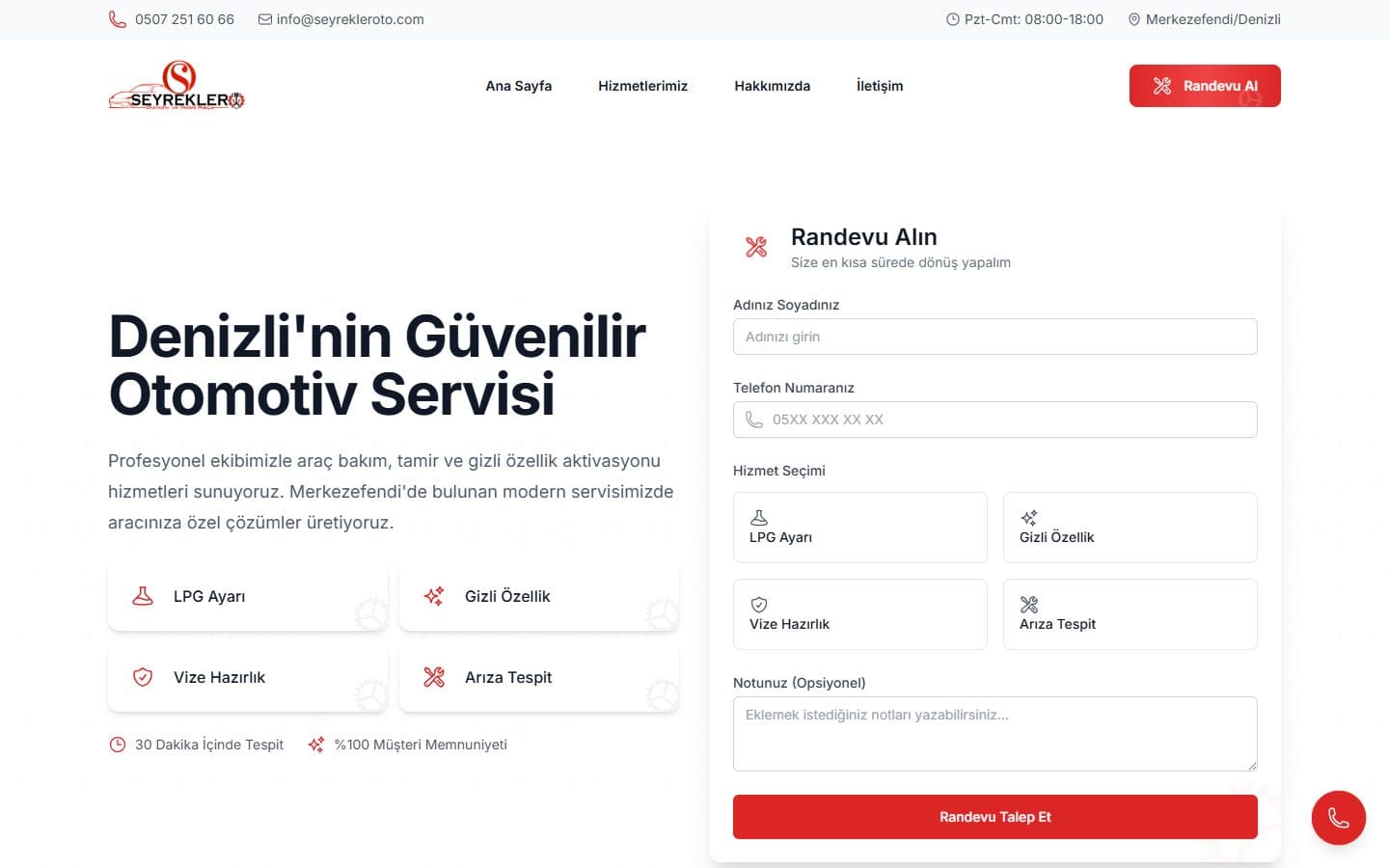
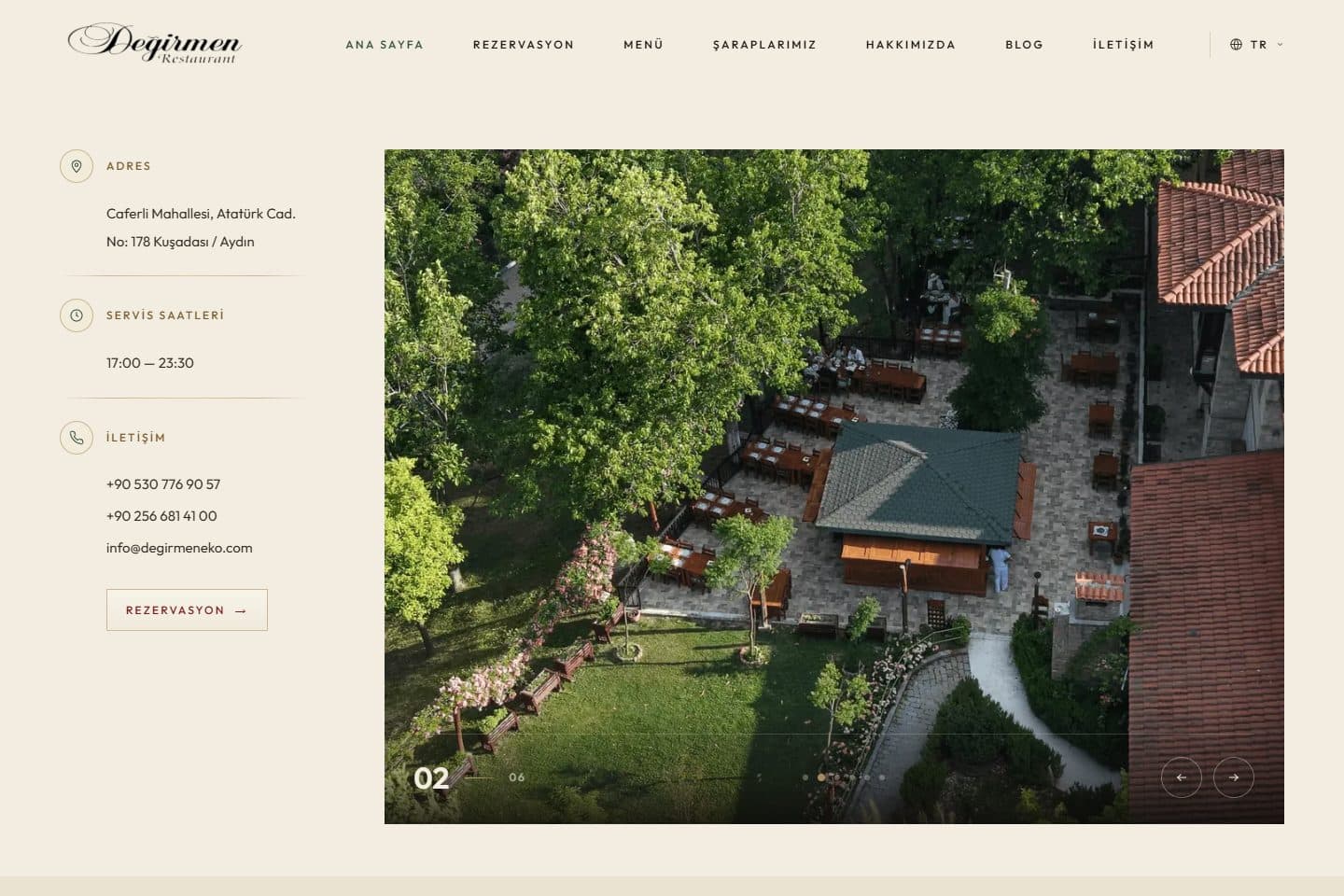
Here are two examples from my own work. At Değirmen Restoran the goal was singular: getting the phone to ring for reservations. Both the site and the ad management behind it were built around that one measure. At Seyrekler Otomotiv, a car service garage, the problem was different: appointments were taken entirely by phone, and when the workshop was busy the phone kept both the work and the customer waiting; the solution was online booking and dedicated service pages. Two businesses, two different jobs, two different sites.
Before you request a quote, write down the answers to these questions and take that sheet with you to the meeting:
Web design quotes are hard to compare, because two quotes rarely describe the same job. Look at the answers rather than the price, and steer clear of any quote that can't answer these questions clearly:
None of these questions require technical knowledge, and all of them are fair. Someone who knows their job won't be bothered by them; on the contrary, they'll see they're working with a client who takes the project seriously. With someone who brushes the questions off or acts as though it's none of your business, the problems continue after handover too.
You won't find price figures in this section; quoting a price for a job whose scope I don't know wouldn't be honest. But if you know where the difference between two quotes comes from, you'll read both the cheap-looking and the expensive-looking one correctly. The difference almost always comes down to these four things:
The hidden cost in a cheap quote is often this: the content is expected from you, the project stalls for months "waiting for copy", and eventually a half-finished site goes live. With an expensive quote, the thing to question is scope: what exactly are you getting for the extra money? Either way, the answer lies in the quote's written scope, not in verbal promises.
Website projects can run remotely too; I won't pretend otherwise. I built the Seyrekler Otomotiv site for a business in Denizli entirely remotely, and the process went smoothly. But the starting point, the conversation where I get to know the business, always works better face to face.
If you're in Kuşadası or the wider Aydın area, I prefer to hold the first meeting at your business. Sitting at the restaurant's table, seeing the garage's waiting area, hearing how you talk to your customers: these things feed directly into the design and the copy. Someone who has seen a tourism business's peak-season rush first-hand doesn't build the same site as someone who never has.
Working locally has one more advantage: knowing the area. From here I know where Kuşadası's summer visitors come from, which areas a restaurant gets calls from, and how the season plays out on the site and in the ads. That knowledge makes a difference, especially when you want to grow with ads once the site is live.
The only reliable way to check references is to look at live work on your own phone. Not a screenshot in a presentation, but the real site you open by typing its address. While you look, pay attention to the following:
I'm subject to the same test. I'll give you the addresses of my live work; you open them on your phone and judge the speed and the copy for yourself. What I can show you is real work and features that actually function, not claims thrown out to sound impressive.
The grievance I see most often isn't about design but about ownership: years later the owner wants to redesign or move the site and discovers that not even the domain is registered in their name. To avoid ending up there, you should have the following at handover:
Asking for these isn't distrust; it's simply owning your business. At handover I register the domain in the client's name and hand over the access details in writing. Holding a client hostage who might not want to work with me tomorrow is insurance that someone who does good work doesn't need; what keeps a client should be the work itself, not an access password.
Getting a website built isn't complicated when you approach it with the right questions: a site with a clear job, a domain you own, a build that loads fast on a phone and a working relationship where you won't be left stranded after launch. If you're in or around Kuşadası, we'll have the first meeting at your business; if you're further away, the process runs with the same clarity, by phone and in writing. If you have questions before asking for a quote, just get in touch; a conversation costs you nothing.
It depends on the scope, and what drags timelines out most isn't the code but the content; projects where copy and images aren't ready sit on hold. Because I write the copy myself, the process doesn't get stuck at that point. A firm date can only be given once the scope is clear, and it should be written in the quote.
A template means dropping your logo and text into a ready-made layout; it's fast, but you look like every other site using the same layout. With an original design, the colors, typography and page structure come from your business's identity. If standing apart from your competitors matters in your line of work, that's exactly where the difference lies.
Not always. First you need to find where the problem is: is the site slow, are you not showing up in searches, or are visitors arriving but not getting in touch? Sometimes the fix isn't a new site but a speed fix, better content or ads. A rebuild is recommended when the existing site isn't worth fixing.
Yours, on your personal or company account. The domain is your business's title deed online; even if the person who built the site changes, the domain stays with you. Before handover, check that it's registered in your name and that renewal notices come to you.
The guide speaks in general terms; your business is specific. Let's start with a message.